
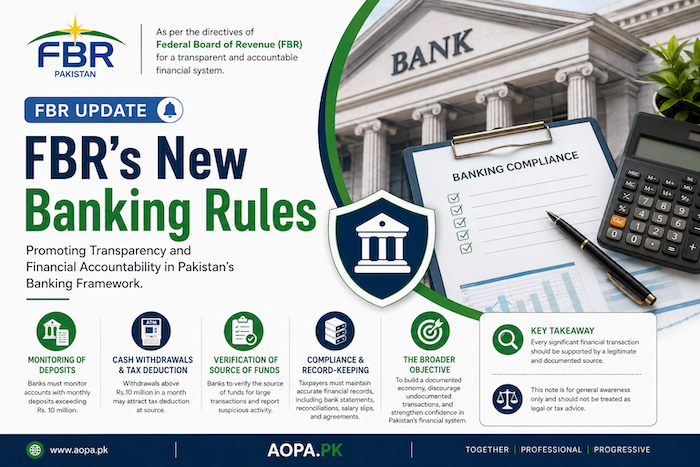
TFBR’s New Banking Rules – Strengthening Transparency, Tax Compliance & Financial Accountability in Pakistan
The Federal Board of Revenue (FBR) has introduced enhanced banking compliance measures aimed at improving financial transparency, strengthening tax documentation, and discouraging undocumented economic activity in Pakistan.
These measures focus on better monitoring of financial transactions, verification of funds, and improved record-keeping to support a transparent and accountable financial system.
Background
Pakistan continues to move towards a more documented economy by increasing coordination between financial institutions and tax authorities.
The latest FBR measures require greater attention towards high-value banking transactions, ensuring that financial activities are properly recorded and supported by legitimate sources of income.
The objective is to improve compliance, broaden the tax base, and build confidence in Pakistan’s financial framework.
Key Measures Introduced Under FBR Banking Rule
1. Monitoring of Bank Deposits
Banks are expected to closely monitor accounts involving significant monthly deposits.
Financial institutions may review transactions exceeding prescribed limits to identify unusual or high-value activity.
This monitoring framework aims to:
- Improve financial transparency
- Detect unusual transaction patterns
- Reduce undocumented financial flows
- Support regulatory compliance
2. Cash Withdrawals and Tax Deduction Requirements
Large cash withdrawals may attract additional scrutiny and applicable tax deductions according to prevailing tax regulations.
The purpose is to encourage:
- Digital financial transactions
- Proper documentation of cash movements
- Compliance with applicable tax laws
Businesses and individuals should maintain proper records explaining the nature and source of significant cash withdrawals.
3. Verification of Source of Funds
Banks may require customers to verify the source of funds for large transactions.
Customers should be prepared to provide supporting documentation such as:
- Business income records
- Sales invoices
- Agreements and contracts
- Tax documentation
- Other relevant financial evidence
This helps ensure transactions are linked with legitimate and declared sources of income.
4. Compliance and Record-Keeping Responsibilities
Taxpayers are encouraged to maintain accurate financial records to avoid future compliance issues.
Important documents include:
- Bank statements
- Business records
- Sales and purchase invoices
- Salary records
- Contracts and agreements
- Tax returns and supporting documents
Maintaining organised records helps demonstrate consistency between declared income and banking activity.
Broader Objective of the New Framework
The enhanced banking compliance approach reflects FBR’s continued commitment towards:
✔ Building a documented economy
✔ Increasing transparency in financial transactions
✔ Expanding the tax base
✔ Reducing undocumented cash activity
✔ Strengthening confidence in Pakistan’s financial system
Key Takeaway for Businesses & Individuals
Every significant financial transaction should have a clear and legitimate explanation supported by proper documentation.
Businesses and taxpayers should:
- Maintain accurate financial records
- Ensure banking activity matches declared income
- Keep evidence of sources of funds
- Follow updated FBR compliance requirements
Proper documentation and compliance can help avoid unnecessary tax notices and financial complications.
Disclaimer:
This article is for general awareness and information purposes only. It should not be considered professional tax or legal advice. Taxpayers should consult qualified tax professionals according to their individual circumstances.
Stay connected with AOPA.PK for the latest FBR updates, taxation news, accounting developments, and professional guidance.